Mission Control: standardising how 13 markets create Upsize Cashback
Led the design of one audit-ready platform for creating Upsize Cashback, so 13 markets work one predictable way. It saves 900+ man-days a year.
2025 – 2026
- Role
- Product design manager and design lead
- Team
- 1 product designer, 2 product managers, 1 business processes manager and an engineering team, with operations teams across 13 markets
- Stack
- Outcome
- Saves 923 man-days a year across 13 markets



The shift
An upsize, short for Upsize Cashback, is extra cashback on top of the standard rate. Business Development pitches it to a merchant as an opportunity. Once it is approved, it becomes an upsize. The merchant pays for each upsize, and ShopBack passes it on to users as cashback.
Each of ShopBack's 13 markets ran its campaigns and merchant opportunities out of its own Google Sheets. As the business raised its bar on financial controls, finance needed to trace each upsize from pitch to payout. A sheet per market could not show that. The goal was one way of working across every market, with a clear audit trail.
What made it hard
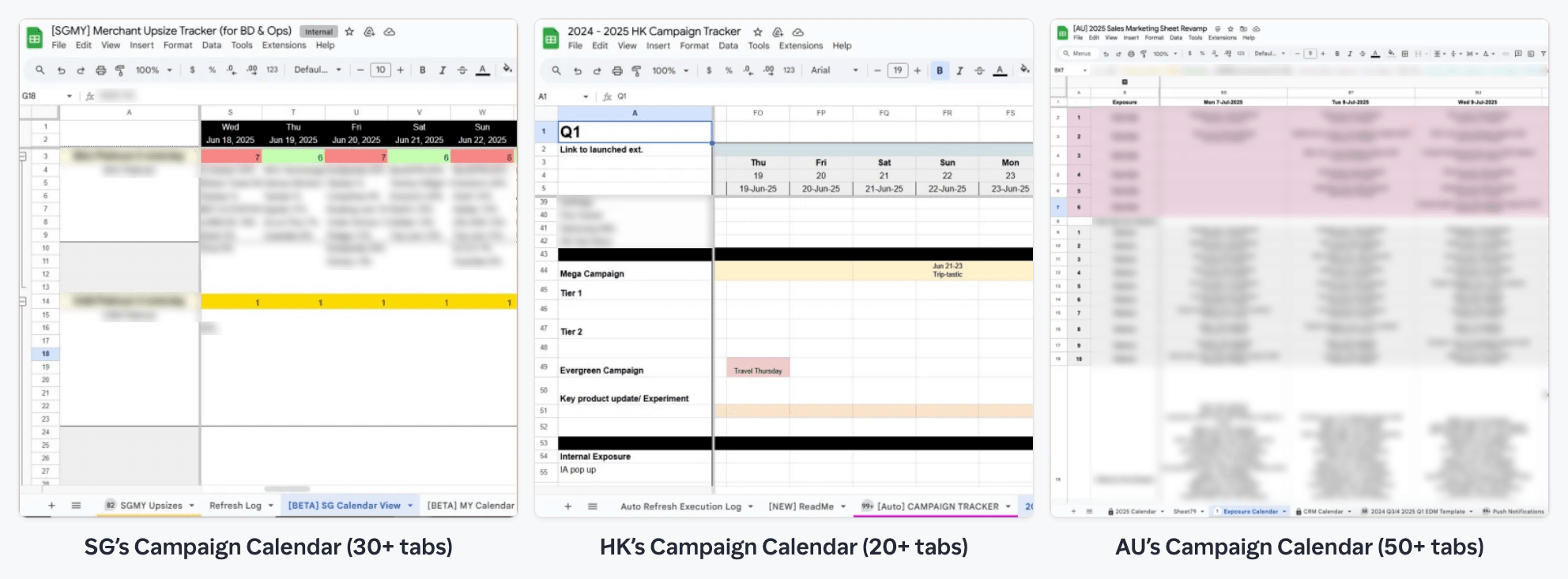
- Root cause: Each market built its own sheets, with its own file names, structure, layouts and packages. Singapore's campaign calendar ran to 30+ tabs, Hong Kong's to 20+ and Australia's to 50+, and the other markets kept their own too. Years of this left no consistent, clean data.
- Consequence: Each market ran things differently, so no one could easily show who approved a rate, when, and on what terms, the trail a financial audit asks for. The work ran on copy and paste, and one deleted space could break a sheet. No one could see packages and upsizes across campaigns, and a fix in one market never reached the others.
- Constraint: The obvious question was why not use AI from the start. With no consistent, clean data for it to work from, the platform had to come first. Eight downstream systems, including rates, cashback tiers, Salesforce and Braze, had to keep working, and the rollout could not happen all at once.
What I did
13 markets, one way of working, one platform.
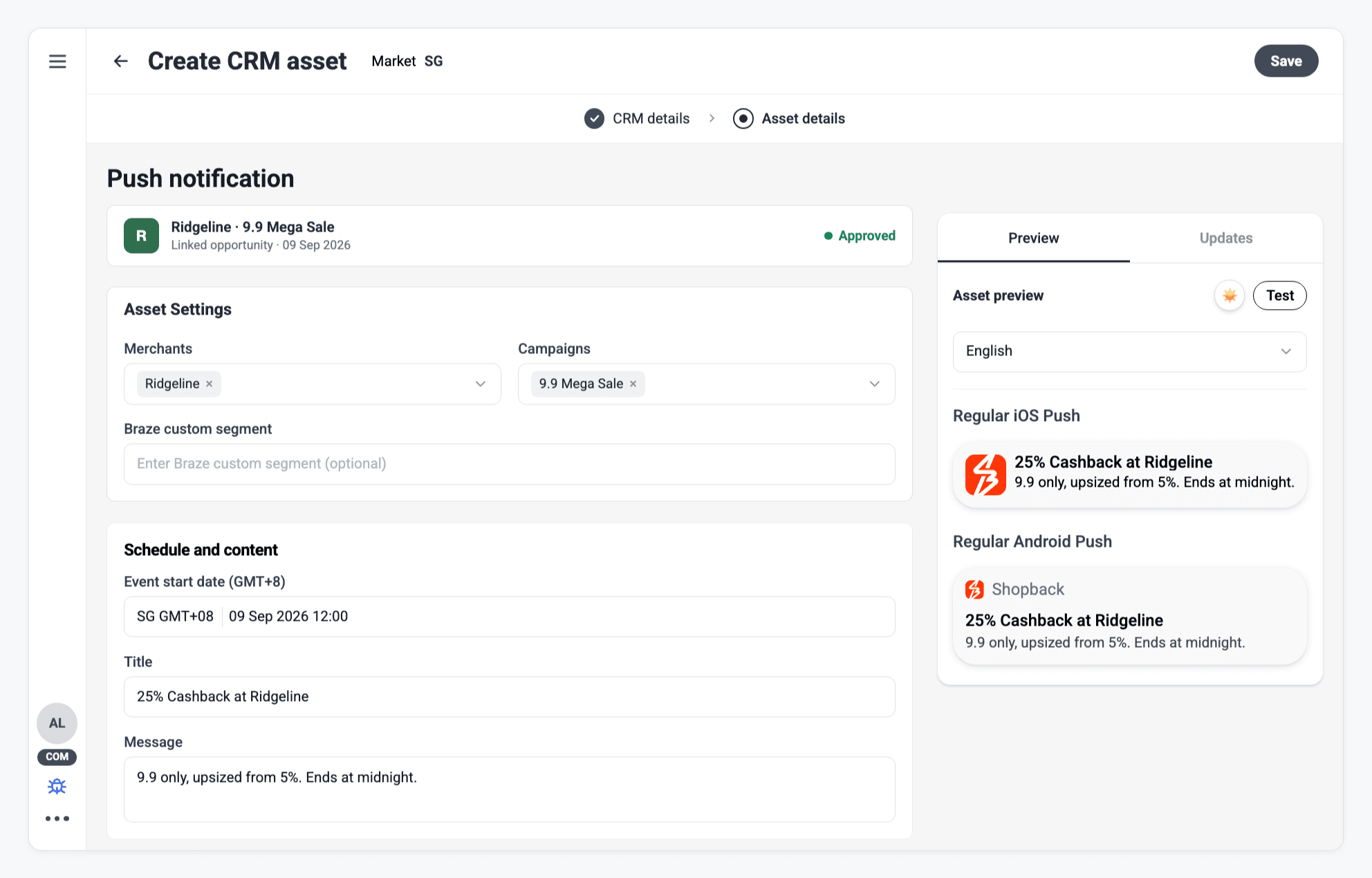
I led the design of Mission Control, the operating system for campaigns and opportunities. It launched on 30 May 2025. Marketing, Business Development, Operations, Customer Relationship Management (CRM) and the general manager now work on one single platform which syncs with the downstream systems, automates the steps after approval and shows everyone the same picture. It has five modules:
- Campaign calendar, a single source of truth for every campaign, big or small, so every team plans from one calendar.
- Commercial management, a guided form that leaves little room for error, plus autofilled templates that make pitching faster.
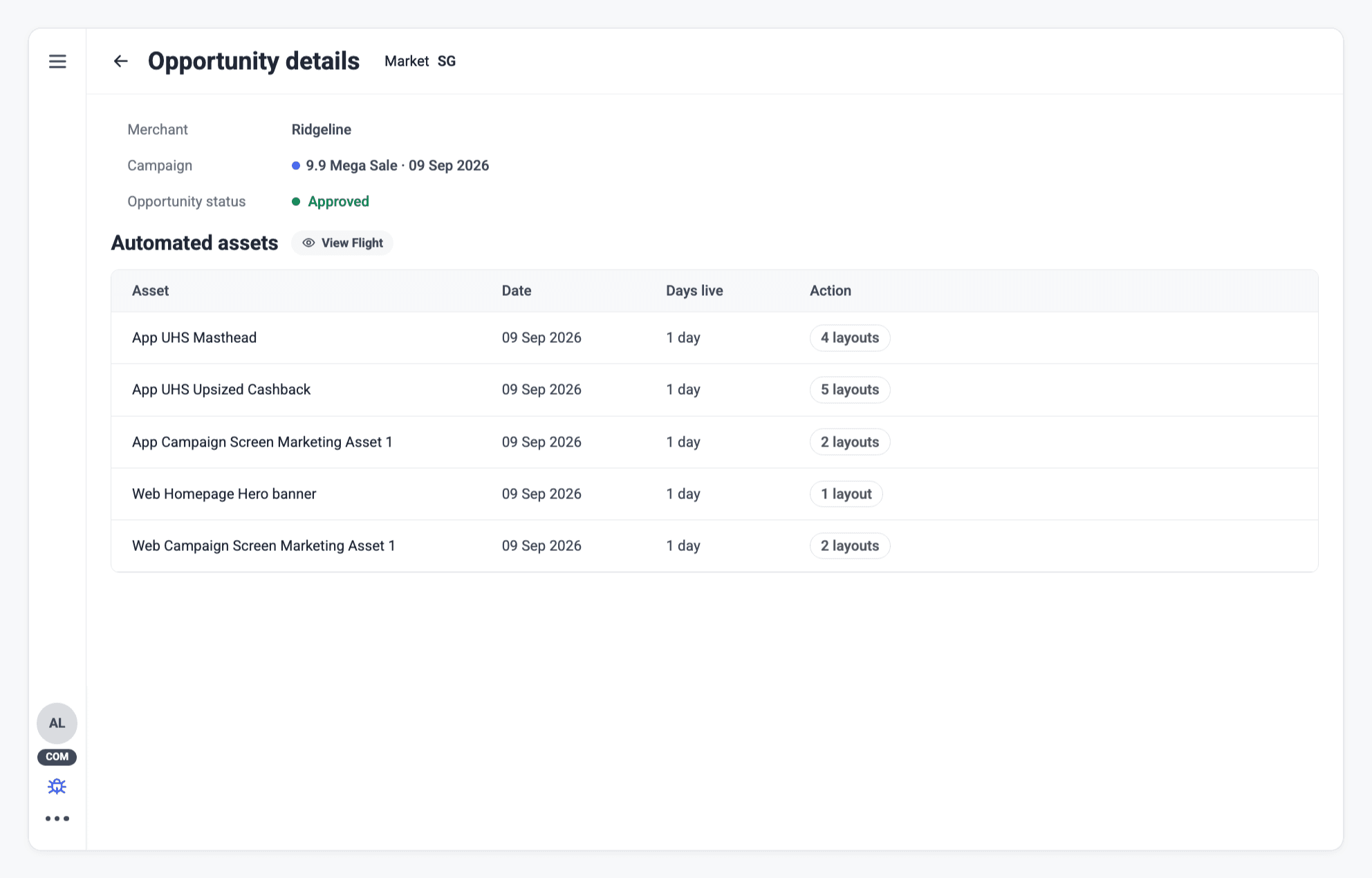
- CRM and marketing, push notifications and emails that automatically sync with Braze when an opportunity is approved.
- Content Platform Next (CP Next), a drag-and-drop builder for app and web campaign pages, each starting from the calendar with its opportunities in place.
- Template manager, a library of banner templates that come straight from Figma, ready to use in CP Next, so banners stay consistent without a redesign each time.
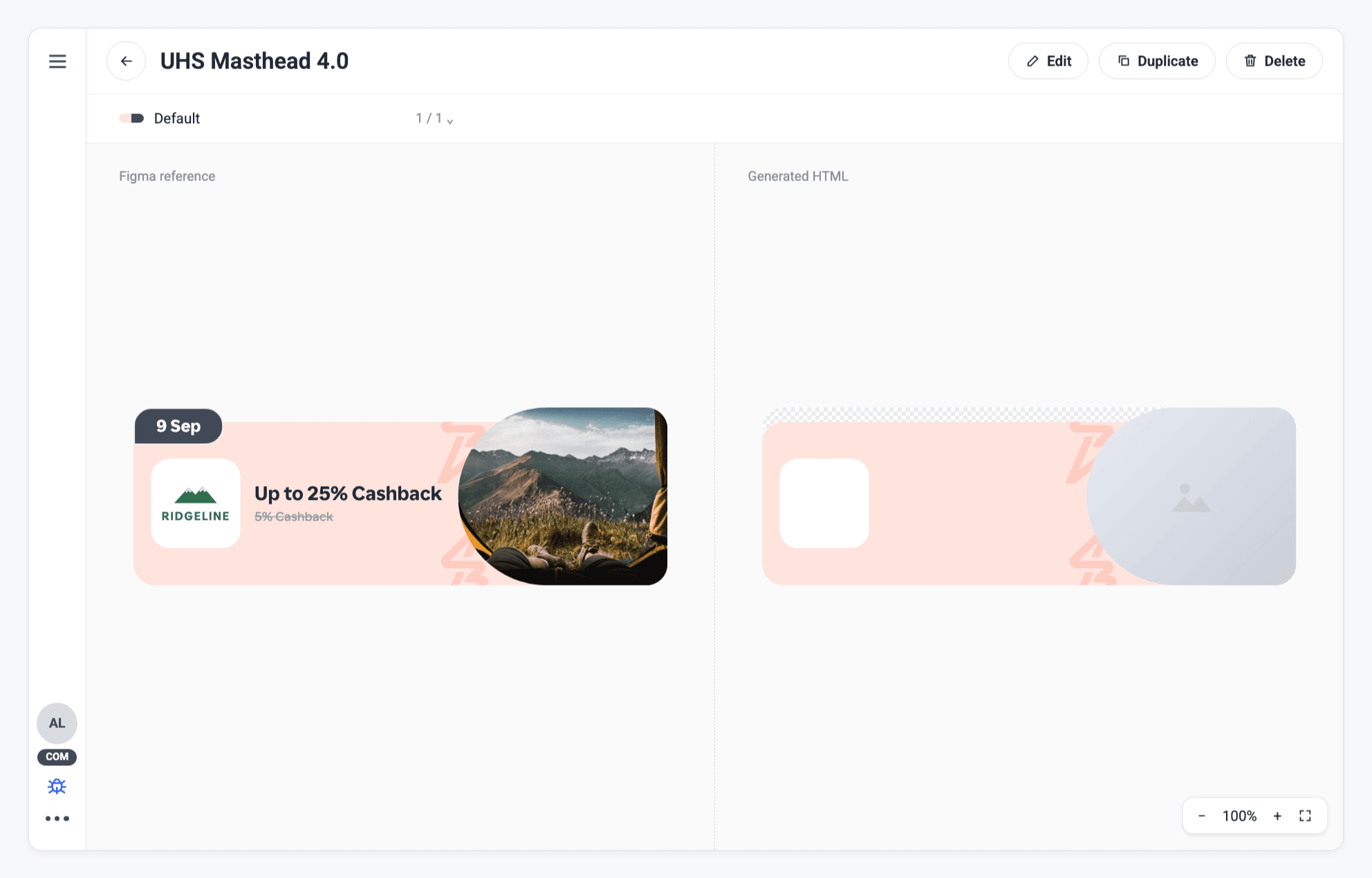
I designed the CRM and marketing, campaign calendar and CP Next modules myself. The product designer designed the commercial management and template manager modules.
What changed
- Mission Control saves 923 man-days a year across 13 markets, a figure the general manager and project lead validated.
- It adds about S$370k a year in productivity value and makes all scoped workflows about 60% more efficient.
- Every opportunity and upsize now carries its approval history in one place, so the process stands up to a financial audit.
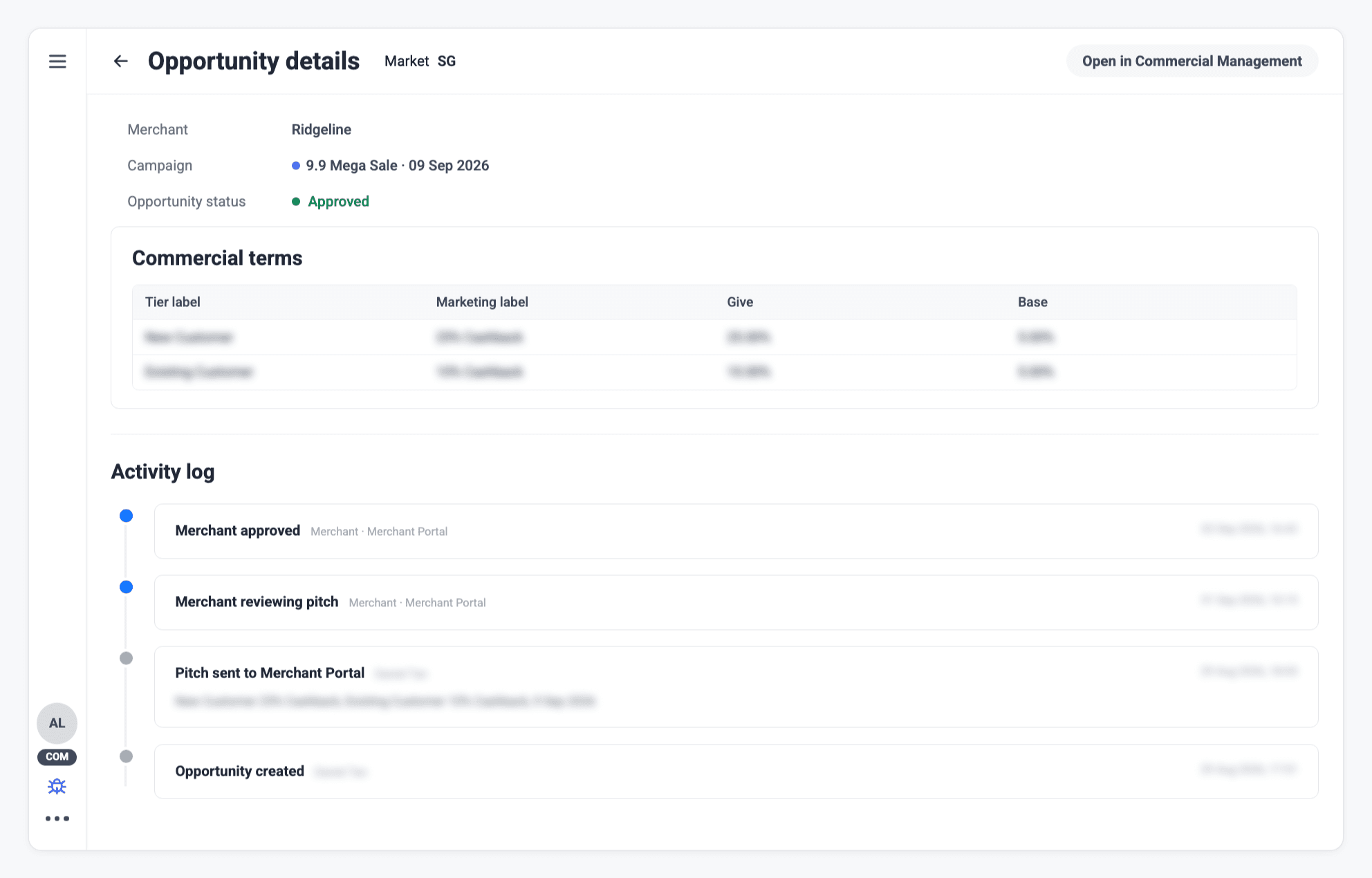
- Teams get one calendar, a guided opportunity form and automatic downstream booking in place of a set of sheets per market.
- With clean data in one platform, engineering built AI bots and Model Context Protocol (MCP) tools that help teams triage, understand and create items in Mission Control.