
Travel Planner: scaling travel with metasearch
Led and designed a zero to one metasearch for 12 markets. Stay link paste now carries up to two thirds of stay redirects.
2025 – 2026
- Role
- Product design manager and design lead
- Team
- 1 product designer, 1 product manager and 8 engineers
- Stack
- Outcome
- Live in 12 markets, with stay link paste at 42% to 64% of stay shopping trips in three markets

The shift
Travel partners were cutting their affiliate marketing budgets. Rather than defend the affiliate business, ShopBack went upper funnel to keep growing travel, and added metasearch partners such as Skyscanner and Kayak. The 2025 goal was to double transacting travel customers.
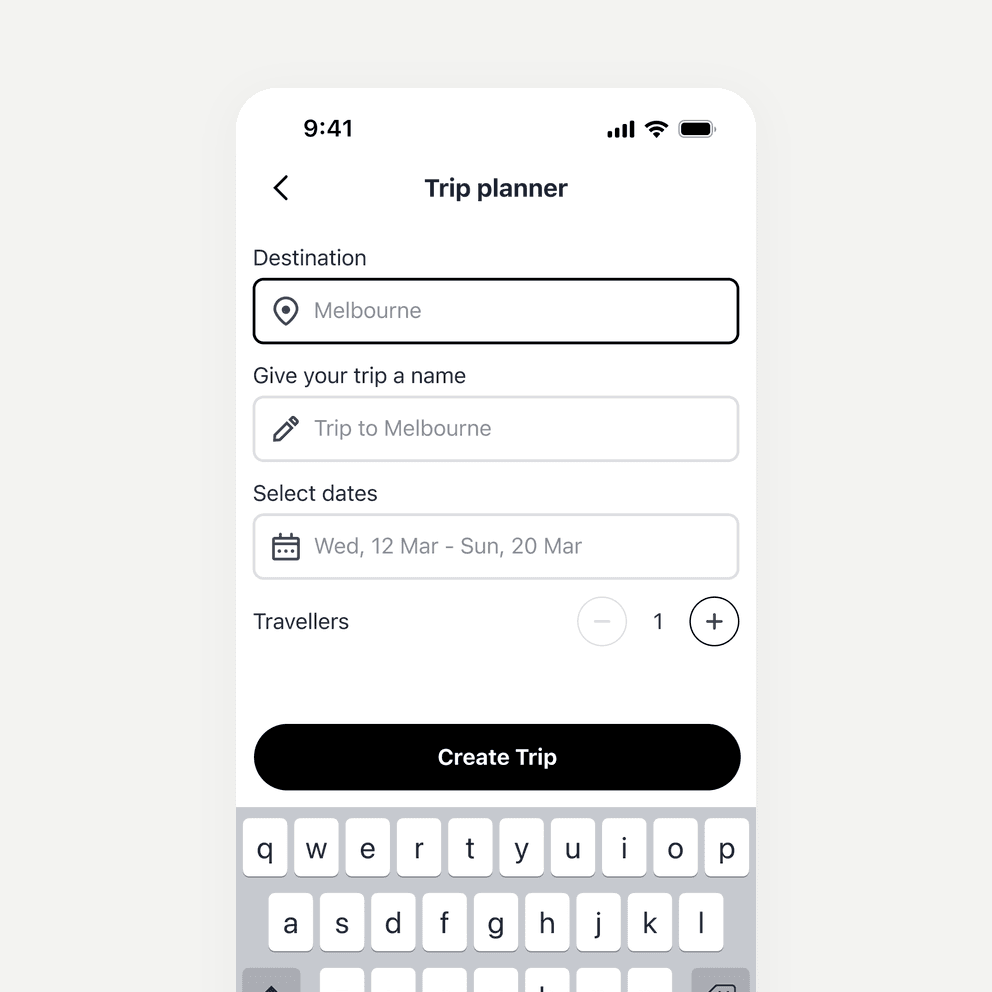
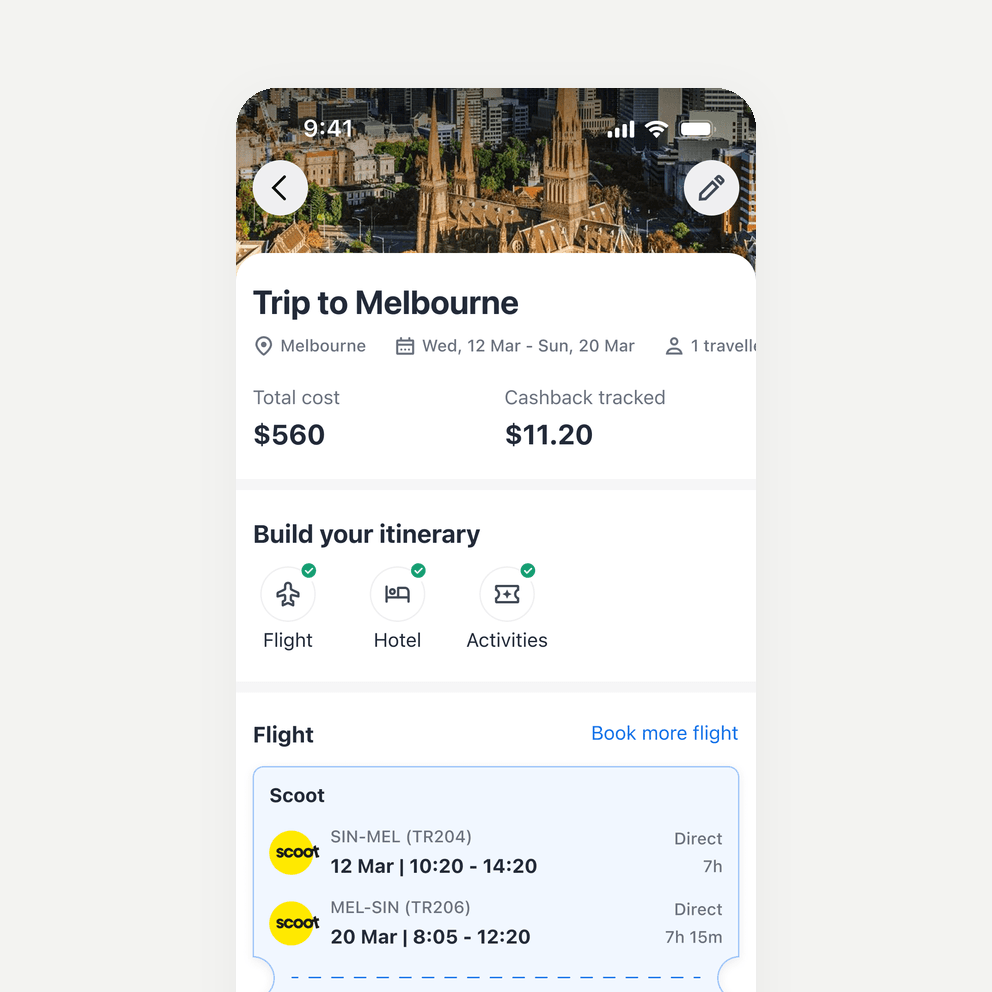
The initial approach was a trip planner, where users create a trip and plan around it. At a leadership workshop in March 2025, the bet became metasearch for flights and stays. Users compare partners, book on the partner's site and earn cashback on the booking. Travel Planner launched in June 2025 and was live in 12 markets by the end of the year.
What made it hard
- Root cause: ShopBack never holds the booking. Every result comes from a partner, so search, prices and speed depend on what each partner's API returns.
- Consequence: The team deferred the full launch in May 2025. Flight search was not yet as good as the market leaders. Stay search was not working. Users did not understand the cashback estimates in the trip planner.
- Constraint: The app asks several partners for results and waits up to 18 seconds in most markets. The target is under 15. Each of the 12 markets has its own partners, currency and ways people book travel.
What I did
I led and designed the first metasearch release, which went on to ship in 12 markets. After launch, I introduced stay link paste to grow transacting stay customers, because stays bring in the most revenue in travel. It builds on a habit users in emerging markets already had, and gets past the limits of stay search.
When search can't find the stay, let the user paste the link.
- Prototyped the first concept, create trip, with the product designer. When the bet moved to metasearch, create trip launched alongside it. It is still in the product today.
- Designed the first release and led the product designer on it. I put the metasearch flow first so engineering could start, and asked product for clearer requirements on the first two screens.
- Kept the closed beta when the product manager proposed skipping it. User testing had only covered the flow before purchase.
- Pushed back on a decision to show partners that pay no cashback, because it went against the product's value proposition.
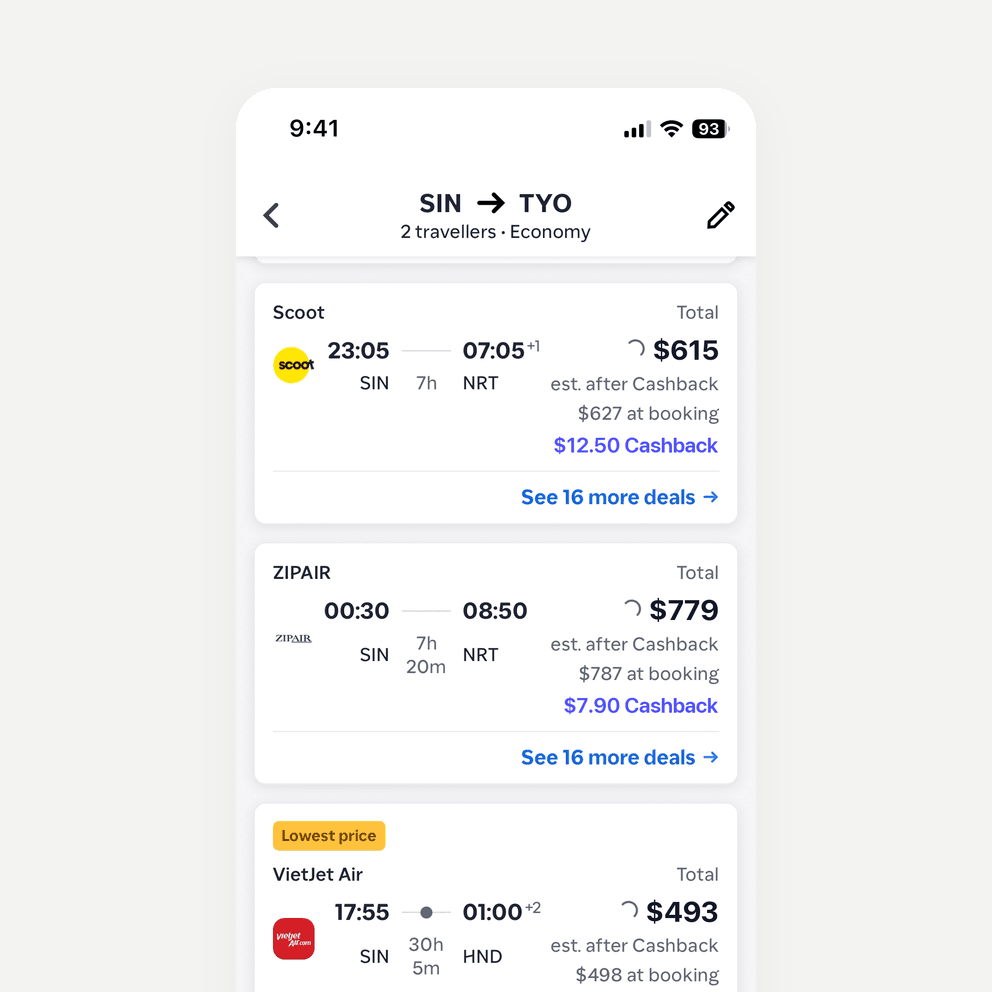
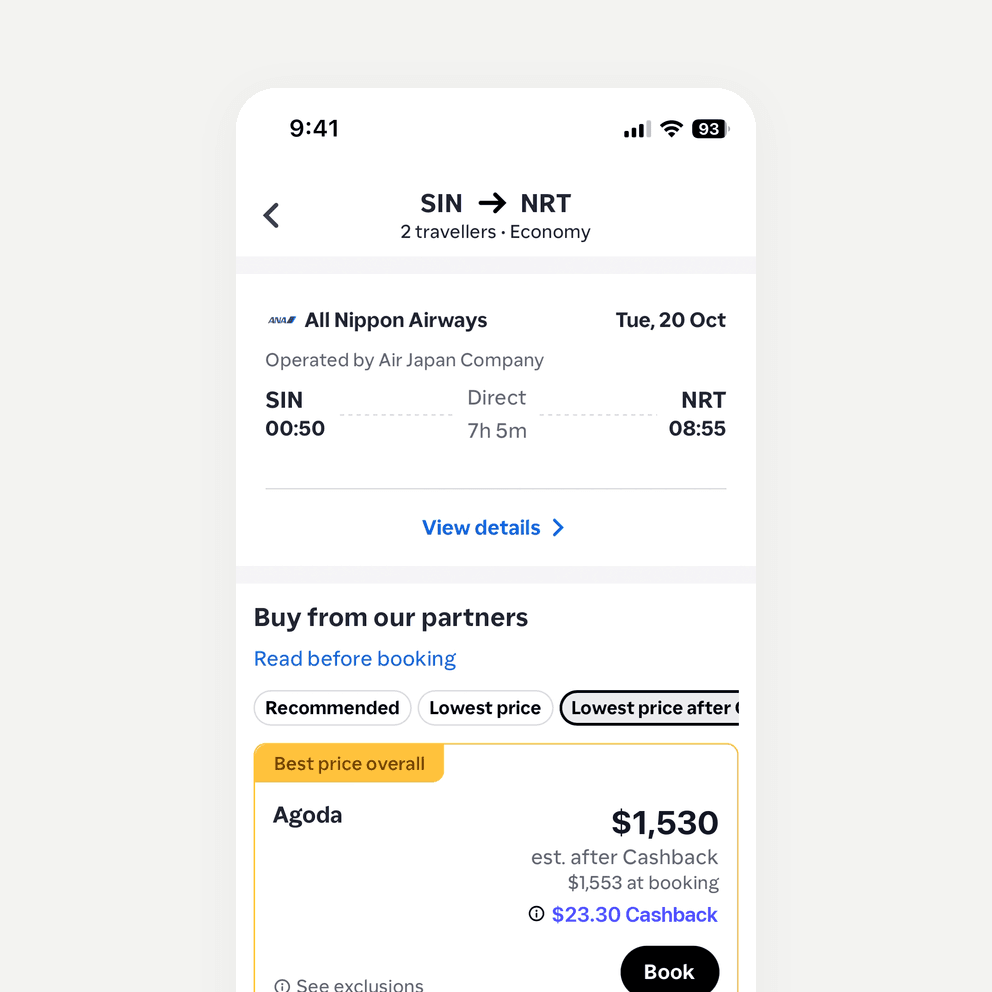
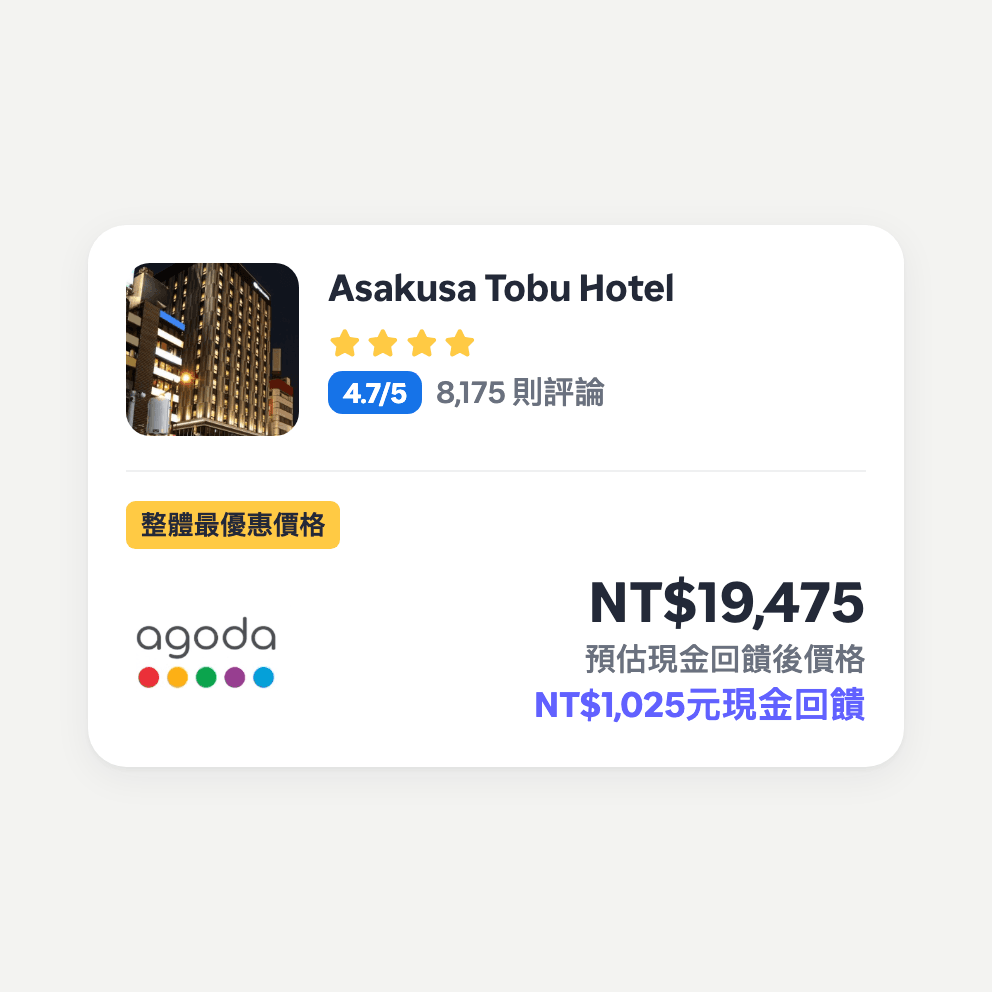
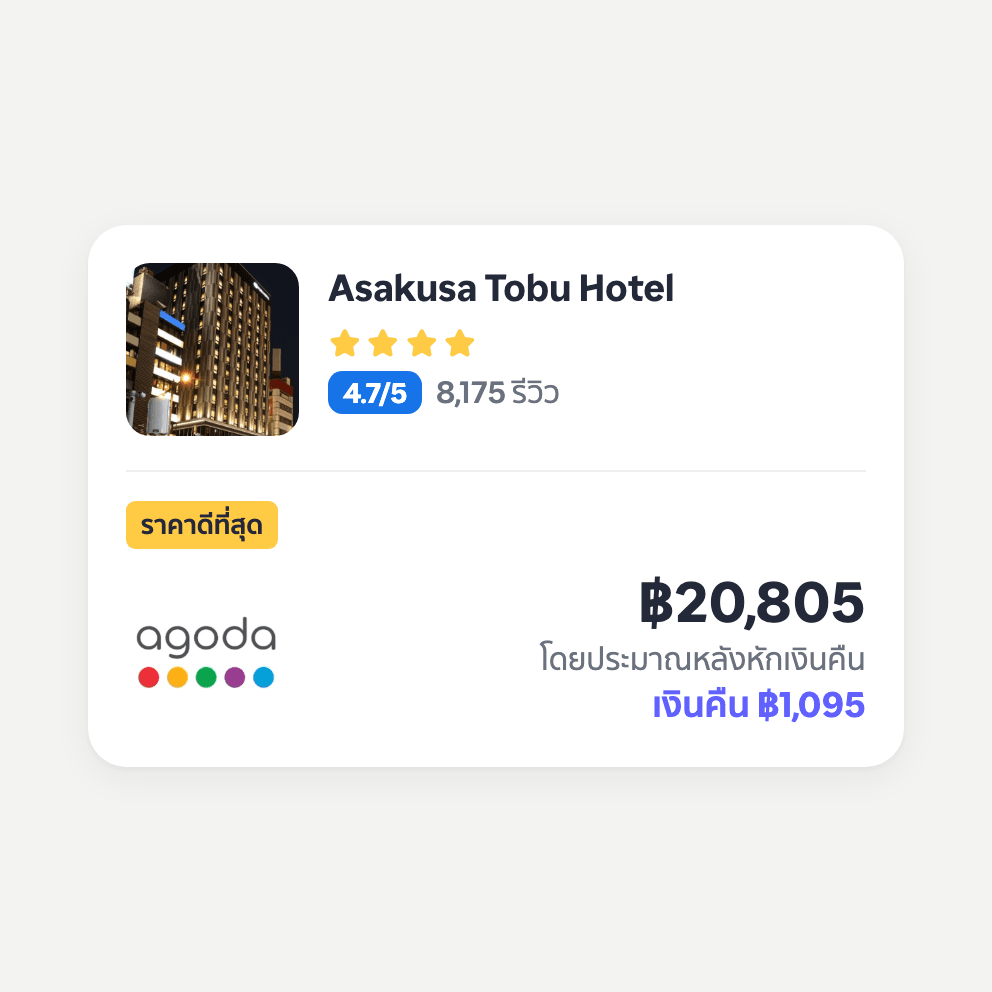
- Kept the design working in long translations. I blocked a layout of two side by side buttons because the labels would cut off in some languages. When Vietnamese labels later wrapped, I asked for equal widths and a two-line limit.
- After launch, stay search still depended on what partners returned and kept missing real properties. In emerging markets such as Thailand, the Philippines, Indonesia and Vietnam, pasting shopping links into ShopBack to earn cashback was already a regular habit. I proposed using that habit for stays, so users paste the link to a stay instead of searching for it. I put it on the roadmap, the product designer designed it, and it shipped in December 2025.
What changed
- By March 2026, stay link paste made up 42% to 64% of stay shopping trips in Indonesia, Vietnam and Thailand. It did not take trips away from stay search.
- Interviews in early 2026 showed that users choose the stay on another site first, then come to ShopBack to activate cashback. Stay link paste was well received in emerging markets, because users already pasted links into ShopBack, a habit we had introduced.
- Flight conversion, the share of result clicks that go on to a partner, reached 33.9% in Q1 2026 against a 30% target. Stay conversion reached 38.7%, with no formal target.
- The product designer's Price Calendar and Sequential Round-trip gave the quarter's largest flight conversion lift, 3.05 points. That is a before and after reading on one release.
- Volume did not keep pace. Q2 2026 reached 71% of its daily shopping trip target and Q3 reached 53%. Placement tests found no clear lift, so more visibility alone is not a proven way to get more bookings.
Prices and cashback in the screens are illustrative.